
A circuit breaker that keeps tripping is your electrical system’s way of telling you something is wrong. In most Huntington Beach homes, the culprit is one of five problems: an overloaded circuit, a short circuit, a ground fault, a defective breaker, or an aging electrical panel. Identifying which one is the first step toward a safe fix.
Key Takeaways
- Overloaded circuits are the most common cause, especially in older homes where a single circuit powers too many devices.
- Short circuits and ground faults are more serious and require a professional inspection before you reset the breaker.
- A breaker that trips repeatedly on a lightly loaded circuit is often defective and needs replacement.
- Older panels may need upgrading, particularly in coastal areas where salt-air corrosion accelerates wear.
- Safe homeowner steps include unplugging devices and resetting once. Anything beyond that should be handled by a qualified electrician.
What Are the Most Common Reasons a Circuit Breaker Trips?
A breaker trips when it detects more current than the circuit is rated to carry, or when it senses a dangerous fault condition. The five causes below account for the vast majority of tripping breakers in residential homes. Each one has a different fix, so pinpointing the right cause matters.
1. Overloaded Circuit
This is the most frequent cause. A standard 15-amp household circuit can safely handle about 1,440 watts of continuous load (80% of its rated capacity, per NFPA 70, the National Electrical Code). Plug in a space heater, a hair dryer, and a laptop on the same circuit and you’ll likely exceed that limit fast.
Common overload scenarios in Huntington Beach homes:
- Kitchen circuits shared between a microwave, toaster oven, and coffee maker
- Garage circuits running a refrigerator plus power tools
- Bedroom circuits with window AC units added after the home was built
- Holiday lighting strung across multiple outlets on one circuit
Safe homeowner step: Unplug several devices, reset the breaker once, and redistribute the load across different circuits. If it holds, you’ve found your problem.
2. Short Circuit
A short circuit happens when a hot wire touches a neutral wire, creating a sudden surge of current. This can occur inside an outlet, inside a device’s power cord, or inside the wall. You may notice a burning smell, scorch marks on an outlet face, or a loud pop when the breaker trips.
Do not reset a breaker you suspect has tripped due to a short circuit. Unplug everything on that circuit and call an electrician to inspect the wiring before restoring power.
3. Ground Fault
A ground fault is similar to a short circuit, but the hot wire contacts a grounded surface instead of the neutral wire. These are especially common in bathrooms, kitchens, garages, and outdoor areas where moisture is present. The U.S. Consumer Product Safety Commission estimates ground faults cause hundreds of electrocution deaths each year in the U.S., which is exactly why GFCI outlets and GFCI breakers exist.
If a GFCI outlet or breaker trips repeatedly in a wet area, the fault may be in the wiring or a connected appliance, not the outlet itself.
4. Defective or Worn-Out Breaker
Breakers are mechanical devices and they wear out. A breaker that trips under a light load, or one that won’t stay reset, is often simply at the end of its service life. Breakers can also develop internal faults from heat cycling over many years. Replacing a single breaker is a straightforward job for an electrician and typically resolves the problem immediately.
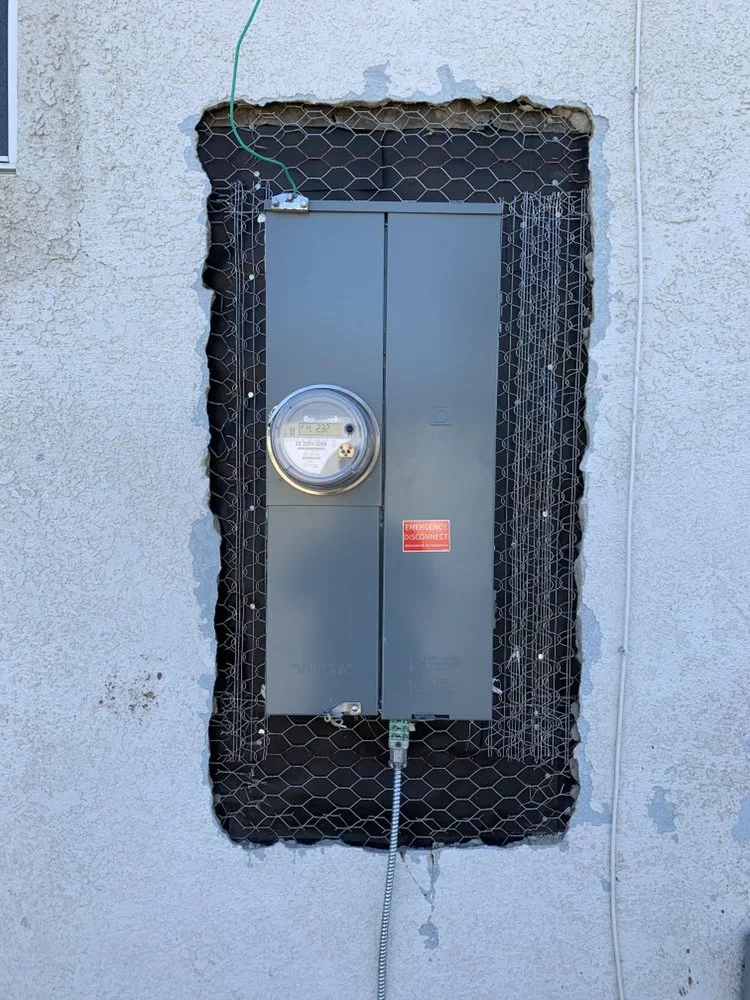
5. Aging or Undersized Electrical Panel
Many Huntington Beach homes built in the 1960s through 1980s were wired with 100-amp service panels, which were adequate for the appliance loads of that era. Modern homes routinely need 200-amp service to support EV chargers, central AC, multiple large appliances, and home offices. An undersized panel trips frequently because the overall demand simply exceeds what the system was designed to handle.
Coastal salt air is an additional factor here. Homes within a few miles of the Pacific, including neighborhoods like Sunset Beach, Bolsa Chica, and downtown Huntington Beach, see accelerated corrosion on panel bus bars and breaker contacts. That corrosion increases resistance, generates heat, and causes nuisance tripping even when loads are within normal range.
How Much Does It Cost to Fix a Tripping Breaker? (Estimated Ranges)
Repair costs vary significantly depending on the root cause. The table below describes what drives the cost for common electrical repairs. These are general cost factors, not quotes from Premier Electrical Services. Your actual cost will depend on the specific conditions in your home, local permit requirements, and the scope of work involved.
| Repair Type | Typical Estimated Range | Notes |
|---|---|---|
| Single breaker replacement | Depends on breaker type and labor time | Includes labor; cost varies by breaker type (standard, AFCI, GFCI) |
| Circuit overload fix (outlet/circuit add) | Depends on circuit length and access | Adding a dedicated circuit to redistribute load |
| Short circuit or ground fault repair | Depends on fault location in the wiring | Wider range depending on where the fault is located in the wiring |
| Panel upgrade (100A to 200A) | Depends on panel size, permits, and utility coordination | California permit required; utility coordination may add time and cost |
| Full electrical inspection | Depends on home size and scope | Recommended before any panel work or repeated-fault diagnosis |
In California, panel replacement and new circuit work require a permit from your local building department. In Huntington Beach, that means coordinating with the City’s Building and Safety Division and, for service upgrades, scheduling a Southern California Edison reconnect. A qualified electrician handles that process for you.
A breaker that trips is doing its job. The real problem is whatever is making it trip, and that’s what needs to be fixed.
What Warning Signs Mean You Need an Electrician Right Away?
Some tripping breakers are a minor nuisance. Others are a fire or shock hazard. Stop using the affected circuit and call an electrician promptly if you notice any of the following:
- Burning smell near an outlet, switch, or the panel itself
- Scorch marks or discoloration on outlet covers or breaker faces
- Buzzing, crackling, or popping sounds from the panel or walls
- Breaker feels hot to the touch after tripping
- Lights flickering on the same circuit before the trip
- Multiple breakers tripping at the same time (possible main panel issue)
- Breaker won’t stay reset even with all devices unplugged
These symptoms point to a fault condition, not just an overload. Resetting the breaker without fixing the underlying problem is genuinely dangerous.
What Can a Homeowner Safely Do vs. What Requires a Pro?
There’s a clear line here, and it’s worth knowing before you start poking around.
Safe homeowner observations and steps
- Unplug devices on the tripped circuit before resetting
- Reset the breaker once (push fully to OFF, then back to ON)
- Note which circuit tripped and what was running on it
- Test GFCI outlets in bathrooms and kitchens using the test/reset buttons
- Check whether a specific appliance consistently causes the trip
Leave this to a qualified electrician
- Opening the electrical panel for any reason
- Replacing a breaker
- Tracing a short circuit or ground fault in the wiring
- Adding a new circuit or subpanel
- Upgrading service from 100A to 200A
- Any work requiring a permit (required by California law for most electrical alterations)
I’ve seen homeowners reset a breaker a dozen times thinking it’s a fluke, when the wiring behind the wall has been arcing for weeks. That’s how house fires start. One reset is fine. Repeated resets without a diagnosis are not.
The U.S. Department of Energy recommends having your home’s electrical system inspected by a qualified electrician if your home is older, if you’ve added major appliances, or if you’re experiencing repeated breaker trips.
Ready to Stop the Tripping for Good?
Premier Electrical Services serves Huntington Beach and the surrounding Orange County area. If your breaker keeps tripping and you’re not sure why, call us at (949) 800-7196 to schedule an inspection. We offer electrical panel repair, electrical panel replacement and upgrading, electrical wiring repair, and full electrical inspections to get to the root of the problem.
FAQs
Is it dangerous to keep resetting a tripping circuit breaker?
Resetting once after unplugging devices is fine. Repeatedly resetting a breaker that keeps tripping, especially without removing the load, can allow a fault condition to persist and create a fire or shock hazard. If the breaker trips again after one reset, stop and call an electrician.
Why does my breaker trip at night when nothing extra is running?
Nighttime trips are often caused by appliances that cycle on automatically, such as refrigerators, HVAC systems, or pool pumps. A defective breaker that’s sensitive to heat can also trip after the panel has warmed up during the day. An electrician can monitor the circuit and identify the cause.
How do I know if I have a ground fault vs. a short circuit?
Both cause an immediate trip and can produce a burning smell or pop. Ground faults typically occur near moisture (bathrooms, kitchens, outdoors) and often trip a GFCI device first. Short circuits can happen anywhere and are more likely to leave scorch marks. An electrician uses a multimeter to distinguish between the two.
Can a tripping breaker cause damage to my appliances?
The breaker itself protects appliances by cutting power quickly. However, the underlying fault that caused the trip, such as a voltage spike from a short circuit, can damage sensitive electronics. If a short circuit occurred, have the circuit inspected before plugging devices back in.
How old is too old for an electrical panel?
Most electricians recommend having older panels inspected closely. Panels from certain manufacturers (such as Federal Pacific and Zinsco, common in 1960s-1980s homes) have documented reliability issues and are often recommended for replacement regardless of age.
Do I need a permit to replace a circuit breaker in Huntington Beach?
Replacing a single breaker in kind typically does not require a permit in California, but a panel upgrade or new circuit installation does. The City of Huntington Beach follows the California Electrical Code, which is based on the National Electrical Code. Your electrician should pull any required permits before starting work.
Why do breakers trip more often in summer in Huntington Beach?
Summer heat increases electrical demand from air conditioning, fans, and refrigeration. Higher ambient temperatures also reduce a breaker’s trip threshold slightly, meaning a circuit that barely holds in winter may trip in July. If summer tripping is a recurring pattern, the circuit may be consistently running near its limit and a dedicated circuit or panel upgrade may be the right fix.
What is an AFCI breaker and do I need one?
An Arc Fault Circuit Interrupter (AFCI) breaker detects dangerous arcing conditions that standard breakers miss. California’s current electrical code requires AFCI protection in bedrooms, living rooms, and most other living spaces in new construction and major renovations. If your home still has standard breakers in those areas, upgrading to AFCI breakers adds a meaningful layer of fire protection.